
Does My Low Interest Rate Mean I Should Never Sell My Home in Corona, CA?
Does My Low Interest Rate Mean I Should Never Sell My Home in Corona, CA?
What Your Low Rate Is Actually Worth — and What It Isn't
The Lock-In Effect Is Real — But It Is Fading for a Reason
The Equity Side of the Equation
What the Payment Difference Actually Looks Like After Your Down Payment
When Your Low Rate Really Is a Good Reason to Stay
When the Rate Should Not Be the Deciding Factor
If you bought or refinanced your home between 2019 and 2022, there is a very good chance you are sitting on a mortgage rate somewhere between 2.5% and 3.5%. And if you have been thinking about selling — or just casually entertaining the idea — someone has probably already asked you how you could possibly give that rate up.
It is a fair question. The difference between a 3% mortgage and today's rate of around 6.4% is real and it shows up in your monthly payment in a way that is hard to ignore. That gap has kept a lot of Corona homeowners locked in place for the past two or three years, choosing to stay in homes that no longer fit rather than face the financial hit of moving.
But here is what that conversation almost always leaves out: your interest rate is one variable in a much larger financial picture. And for a lot of families in Corona who have been holding onto their rate like a life raft, the actual math — when you run it with real numbers — looks meaningfully different than the version they have been carrying around in their heads.
This post is about that math. And about when your low rate is a genuinely good reason to stay put, and when it is costing you more than it is protecting you.
What Your Low Rate Is Actually Worth — and What It Isn't
Let's start with honesty: your low mortgage rate is a real financial asset. It is not nothing. The difference between a 3% rate and a 6.4% rate on the same loan balance translates to hundreds of dollars per month in payment difference, and hundreds of thousands of dollars over the life of the loan if you held both mortgages to term.
For the median-priced California home, jumping from a 3% to a 6% mortgage rate increases the monthly principal and interest payment by approximately $1,211. That is a significant number and it deserves to be taken seriously.
About 77% of California homeowners currently hold mortgage rates under 5%, which is why this conversation is happening in living rooms across Corona on a regular basis. You are not alone in feeling the pull of that rate.
But here is what your low rate is not: it is not a reason to stay in a home that is actively working against your family. It is not a shield that protects you from the costs of living in the wrong house. And it is not a number that exists in isolation from the rest of your financial picture.
Your rate matters. Your equity matters more.
The Lock-In Effect Is Real — But It Is Fading for a Reason
Economists have a name for what you are experiencing. The lock-in effect refers to the financial hit homeowners take when their existing mortgage rate is far lower than what is available in the current market. The result has been fewer people listing their homes, which in turn has kept inventory tight and prices elevated in many markets.
That dynamic kept a lot of Corona homeowners frozen in place for 2023 and 2024. But something has been shifting.
During the peak of ultra-low rates, 24.6% of mortgage holders had a rate below 3%. By early 2026, more mortgage holders carry a rate above 6% than below 3%. The lock-in effect is still real, but its grip on the market is loosening — because life keeps moving, families keep growing, and the rate on your current mortgage does not solve the problems your current home creates.
The families who are starting to move despite having low rates are not making a financial mistake. They are making a life decision with accurate information, and they are finding that the math is more workable than they assumed.
The Equity Side of the Equation
Here is the variable that most homeowners with low rates are not giving enough weight: the equity they have built.
If you bought your Corona home in 2019 for $520,000, your home may be worth somewhere in the $780,000 to $850,000 range today depending on location, condition, and neighborhood. That is $260,000 to $330,000 in gross appreciation — before you account for the principal you have paid down over five or six years of mortgage payments.
Subtract your remaining loan balance and you are looking at a net equity number that, for many Corona homeowners, is in the $200,000 to $300,000 range or higher.
That equity is what changes the payment math on the next home. Here is why it matters:
You are not borrowing the full purchase price of the move-up home. You are borrowing the purchase price minus your down payment — and your down payment is funded by your equity. A larger down payment means a smaller loan balance, which directly offsets the higher rate on the new mortgage.
Let's run a simple example. Suppose your next home costs $950,000. With $250,000 in equity applied as a down payment, your loan balance is $700,000. At 6.4%, the monthly principal and interest payment on that loan is approximately $4,370.
Now compare that to a scenario where you have less equity and put down only 10% — $95,000 — leaving a loan balance of $855,000. At the same 6.4% rate, your monthly payment is approximately $5,340.
The down payment changes the payment by nearly $1,000 per month on the same home at the same rate. That is the equity doing its job. And for families who bought their Corona home several years ago and have been building equity while values appreciated, that down payment is substantial.
Getting the real number — what your home is actually worth today, what your equity position is, and what the down payment does to your monthly payment on the next purchase — is what lets you make this decision with clarity instead of anxiety. What Is My Corona, CA Home Worth in Today's Market? is the right starting point, and How Much More House Can You Afford When Moving Up in Corona, CA? walks through exactly how to think about the move-up payment math.
What the Payment Difference Actually Looks Like After Your Down Payment
This is where a lot of homeowners are surprised when they finally run the real numbers.
The assumption most families are carrying around goes something like this: "I have a 3% mortgage, rates are over 6%, so my payment is going to be double and we can't afford that." That math makes sense if you are comparing the same loan balance at two different rates. It does not hold when you account for a large down payment reducing the loan balance on the next home.
Let's look at a real-world scenario for a Corona move-up family.
Current home: purchased in 2020 for $550,000, current value approximately $820,000, remaining loan balance of $490,000. Gross equity: $330,000. After estimated selling costs of roughly $50,000, net proceeds: approximately $280,000.
Current monthly payment at 3%: roughly $2,065 per month on the original loan balance.
Move-up home: $950,000 purchase price. Down payment of $280,000. Loan balance: $670,000. Monthly payment at 6.4%: approximately $4,190 per month.
Monthly payment increase: approximately $2,125 per month.
That is a real number. It is not nothing. Whether it is manageable depends entirely on your income and your priorities — and that is a conversation worth having honestly.
But here is the other side of that number: what is the current home costing your family? If you are in a house where two kids are sharing a room, the garage is overflowing with hockey gear, the backyard cannot hold a birthday party, and every morning starts with too many people in too little space — that has a cost too. It just does not show up on a bank statement.
For a lot of families, when they actually sit down and think about the full picture — the payment increase on one side, the daily quality of life on the other — the math is more balanced than they expected. Not comfortable, but not the impossible obstacle they assumed it was.
And importantly: your income has likely changed since 2020. A payment that would have been a stretch five years ago may be entirely manageable at your current earnings level. The calculation deserves to be run with your current numbers, not the ones from when you first bought.
When Your Low Rate Really Is a Good Reason to Stay
Let's be clear about this, because the honest answer is not always "move."
If your home still genuinely works for your family — if the space is adequate, the layout functions, the kids have room, and the daily friction is low — then yes, your low rate is a meaningful reason to stay. There is no urgency to move if the house is doing its job.
If you are considering a lateral move — same size, similar price, different neighborhood — the rate math is harder to justify. You would be giving up a financial asset without gaining enough in return to make it worth it.
If your financial situation has changed in a way that makes a higher monthly payment genuinely unworkable regardless of equity, staying is the right call until that changes.
The rate matters most as a reason to stay when the house is still meeting your family's needs. When it is not, the rate becomes the financial obstacle that is keeping your family in a situation that is costing them something real every day.
When the Rate Should Not Be the Deciding Factor
There are several situations where holding onto your low rate is costing your family more than the rate is protecting you.
When your home has stopped functioning for your daily life. The shared bedrooms, the kitchen that cannot handle the actual volume of your family, the garage that is more storage unit than garage, the backyard that never gets used — these are real costs. They show up in stress, in friction, in the daily exhaustion of managing a household in a space that was not built for the life you are living now. Why Families Outgrow Their First Home Faster Than They Expected covers exactly why this happens and what it means.
When the cost of staying is affecting your kids. Shared rooms past the age where they genuinely work. Not enough space for homework, for privacy, for the normal rhythms of growing up. Kids adapt, but they also notice, and the low-grade tension in a house that is too small for the family affects everyone — including the parents.
When you have been waiting for rates to come back down to 3%. They are not coming back to 3%. That era was historically unprecedented and it is over. The number of mortgage holders with a rate at 6% or above surpassed those with a rate at 3% or below in 2025, and the average interest rate of held mortgages slowly crept up from 3.8% in 2022 to 4.4% in 2025. Forecasts for 2026 and 2027 point to gradual improvement — not a return to pandemic lows. Waiting for that to happen is waiting for something that is not coming.
When your equity is doing nothing for your quality of life. Equity sitting in a house that does not work for your family is not working for you. It is a resource that could be funding the home that actually fits — and it is growing whether you use it or not. At some point, using it makes more sense than watching it accumulate while your family manages around a house that is too small.
The Real Question to Ask
The question most families are asking is: "Can I afford to give up my low rate?" That is the wrong question.
The right question is: "What is it actually costing my family to stay in this house, and does the financial picture make a move up viable?"
Those are two different questions with two different answers.
The first question focuses entirely on the rate and produces anxiety. The second question looks at the full picture — equity, down payment, payment difference, quality of life, timing for your kids — and produces clarity.
For many Corona families who bought before 2022, when they actually run the second question with real numbers, the answer is more workable than they expected. The payment difference is real but manageable. The equity is substantial. The move-up home is within reach. And the cost of staying — in friction, in stress, in kids who need more space — is higher than they have been accounting for.
The only way to know where you stand is to get the real numbers. Not a guess, not a back-of-the-envelope calculation, not a Zillow estimate and a rough mortgage calculator. A real valuation, a real equity calculation, and a real payment projection on the move-up home with your specific down payment applied.
That is the conversation I have with every family who is sitting on this decision. It takes about an hour. It gives you a clear picture of what is actually possible. And in many cases, it turns a decision that felt impossible into one that is simply a matter of timing and priorities.
If you want to understand the current market context before that conversation, Is Right Now a Good Time to Sell My Home in Corona, CA? gives you an honest read on where things stand. Should I Sell Before I Buy or Buy First in Corona, CA? covers how the logistics of the transaction actually work once you decide to move. And What Families Regret Most About Waiting Too Long to Move is worth reading if you have been sitting on this decision for longer than feels comfortable.
Frequently Asked Questions
Is it financially smart to give up a 3% mortgage rate to buy a bigger home in Corona? It depends on your equity and your next purchase price — not on the rate comparison alone. A large down payment funded by your equity significantly reduces the loan balance on the next home, which directly reduces the payment impact of the higher rate. For many Corona families who bought before 2022, the actual payment difference after their down payment is more manageable than they assumed before running the real numbers.
Will mortgage rates come back down to 3% if I wait? No credible forecast is projecting a return to pandemic-era rates of 2% to 3%. Those rates were historically unprecedented and are not expected to return. Current forecasts point to gradual improvement from today's levels toward the mid-5% range over the next couple of years — meaningful improvement, but nowhere near 3%. Waiting for 3% to return means waiting indefinitely.
How much does my down payment actually affect my payment on the move-up home? Significantly. On a $950,000 purchase, the difference between a $100,000 down payment and a $250,000 down payment at 6.4% is roughly $950 per month. Your equity is doing real work when it becomes a larger down payment — which is why knowing your actual equity number matters so much before you do the math in your head.
What if I need my low rate because my income hasn't grown much since I bought? If the higher monthly payment genuinely does not fit your current income, that is a real constraint and a valid reason to wait. But it is worth running the actual numbers with your equity applied before assuming it does not work. A lot of families are surprised to find the payment is more manageable than they assumed once the down payment is factored in.
Is it better to sell now or wait for rates to improve? The right time to sell is when the move makes sense for your family's life and when the financial picture works — not when an external market condition hits a specific number. If you are waiting for rates to reach a point where the payment feels comfortable, get the real math first. You may find the payment is already within range at your equity level. If not, you will have a concrete number to track against instead of a vague sense that things need to get better.
How do I find out if the move-up math actually works for my situation? A real conversation that starts with your home's current value and equity position, then models the payment on the next home with your specific down payment applied. That is exactly the conversation I offer for Corona homeowners — no pressure, no obligation, just a clear picture of what is actually possible. Reach out and we can walk through it together.
What about property taxes — won't those go up significantly if I buy a more expensive home in California? Yes, under Proposition 13, your property tax resets to 1% of the purchase price of the new home when you buy. On a $950,000 home that is approximately $9,500 per year — higher than what you are paying on a home assessed at a lower value years ago. This is a real cost that belongs in your total payment calculation. Proposition 19 does allow homeowners 55 and older to transfer their existing property tax base to a new home under certain conditions, but for most move-up families in the prime family years, the reset applies. Factor it in — but do not let it stop you from running the full math.
Related Articles
How Much More House Can You Afford When Moving Up in Corona, CA?
Why Families Outgrow Their First Home Faster Than They Expected
The Bottom Line
Your low interest rate is a real financial asset. It is not an excuse to stay in a home that no longer fits your family.
The question is never just about the rate. It is about the full picture — your equity, your down payment, the payment on the next home, and the real cost of staying where you are. For many Corona families who bought before 2022, that picture is more workable than the rate comparison alone suggests.
Get the real numbers before you decide. You may be a lot closer to the right next home than you think.
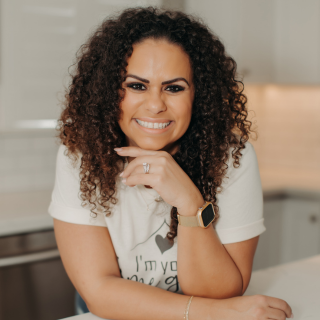
Heather Jones is a Corona, CA Realtor and digital listing specialist who helps homeowners sell their homes for top dollar and move into their next home with a clear, strategic plan. She specializes in working with growing families who are ready to move up from their first home into something that better fits their lifestyle. Known for her strong marketing and hands-on guidance, Heather helps her clients navigate every step of the process with confidence.
Heather Jones, Realtor, Digital Listing Specialist, Community Market Leader
Brokered by eXp Realty of California
DRE #02067219
661.607.6832