What Is My Corona, CA Home Worth in Today's Market?
What Is My Corona, CA Home Worth in Today's Market?
What the Corona Market Looks Like Right Now
Why Your Neighborhood Changes Everything
What Actually Determines Your Home's Value
Why Zillow's Estimate Is Not Your Home's Value
What a Real Valuation Actually Involves
What Sellers Who Bought Before 2022 Are Often Discovering
The Low Interest Rate Question
What Affects Your Home's Value That You Can Control
This is the question most homeowners in Corona ask at least once a year — and more often when life starts changing around them. A growing family that has outgrown their home. A couple thinking about moving up. Someone who bought five or six years ago and genuinely has no idea what their home would sell for today.
It's a fair question, and the honest answer is this: it depends on more than most people think, and it's almost certainly different from what Zillow is telling you.
Here's what the Corona market actually looks like right now, why your specific neighborhood matters enormously, and how to get a real number you can actually make decisions from.
What the Corona Market Looks Like Right Now
The Corona real estate market in 2026 is balanced — which is actually good news for sellers who are priced and positioned correctly.
Median home prices across Corona are sitting in the $730,000 to $780,000 range depending on the data source and property type, with single-family homes averaging closer to $778,000. Homes are selling at approximately 99% of asking price, which tells you buyers are not getting significant discounts on well-priced homes. The average days on market is running between 44 and 65 days depending on the neighborhood and price point — slower than the frenzied pace of 2021 and 2022, but still a healthy, functional market.
Inventory is moderate. There are more options for buyers than there were two or three years ago, which means presentation and pricing matter more than they used to. A home that is priced correctly and shows well is still moving. A home that is overpriced or underprepared is sitting — and sitting homes in a balanced market tend to get ignored.
For sellers who bought four to seven years ago, the equity picture is generally strong. Even with modest softening from the peak, most homeowners in Corona who purchased before 2022 are sitting on significant equity — often more than they realize.
Why Your Neighborhood Changes Everything
The citywide median is a starting point, not an answer. Corona is not one uniform market. The price difference between neighborhoods in this city is significant, and understanding where your home sits within that range is the most important piece of the valuation puzzle.
Here is a rough picture of what different parts of Corona look like right now:
South Corona (zip codes 92881, 92882, 92883) is the highest-demand corridor in the city. This is where the master-planned communities, newer construction, and the neighborhoods closest to Orange County are concentrated. Median values in South Corona are running around $850,000, with move-up homes in the $900,000 to $1.2 million range depending on size, lot, and features.
Eagle Glen is one of the most desirable neighborhoods in all of Corona — a golf course community with larger homes, established landscaping, and strong demand from both local move-up buyers and Orange County relocators. Average prices in Eagle Glen have been running close to $1 million and above, with Redfin data showing the average sale price up more than 13% year over year.
Sycamore Creek is a master-planned community in south Corona with strong family appeal — community pools, parks, and a neighborhood feel that draws buyers consistently. Values here are running around $779,000 as a median, with larger homes commanding more.
North and Central Corona (zip codes 92879, 92880) tend to run lower — older housing stock, smaller lots, and less proximity to the Orange County corridor. These neighborhoods have their buyers, but they operate at a different price point than south Corona. Homes here are generally in the $620,000 to $720,000 range.
Downtown Corona is its own category — smaller homes, older construction, and a median closer to $660,000 — but it draws a specific buyer profile that values walkability and character over square footage.
The point is simple: two homes in Corona with the same square footage can have very different values depending on which side of the city they sit on, which school district they fall in, and which neighborhood features surround them.
What Actually Determines Your Home's Value
Square footage and bedroom count are where most people start. They are not where an accurate valuation ends.
The factors that most directly affect what your Corona home is worth right now:
Location within Corona. As covered above, north versus south is often a $100,000 to $200,000 difference at the same square footage. Proximity to the 91 freeway, the 15 freeway, and the Orange County border all matter to buyers — especially the large pool of OC relocators who are specifically looking at Corona as an affordable alternative to where they're coming from.
School district and boundaries. Corona-Norco Unified is the district for most of Corona, but specific school assignments within the district matter to buyers with kids. Homes zoned for higher-rated elementary and middle schools consistently command a premium over comparable homes in lower-rated zones, sometimes significantly.
Lot size and backyard. A pool adds value in Southern California — real, measurable value. A large flat lot with room for a pool adds value even without one. A small or awkward yard limits your buyer pool. Covered patio space, usable outdoor area, and overall backyard functionality show up in what buyers are willing to pay.
Garage and storage. Three-car garages command a meaningful premium over two-car in the move-up buyer segment. Active families with kids in sports are specifically searching for the extra bay, and they will pay for it.
Condition and presentation. In a balanced market where buyers have options, condition matters more than it did during the seller's market years. A home that is clean, updated in the right places, and photographed professionally competes well. A home that is dated, cluttered, or poorly presented struggles — even if the bones are solid.
Recent comparable sales in your immediate neighborhood. This is the most direct measure of value. What have similar homes on similar streets in your specific neighborhood sold for in the last 60 to 90 days? That data tells the story more accurately than any algorithm or citywide average.
Why Zillow's Estimate Is Not Your Home's Value
This comes up in nearly every listing conversation I have. A homeowner pulls up their Zestimate and either feels great about it or confused by it — and either way, they want to know if it's accurate.
The honest answer is: sometimes it's in the right ballpark, and sometimes it's off by $50,000 to $100,000 or more in either direction. Zillow's algorithm works from public data — tax records, MLS history, general market trends. It does not know that you renovated the kitchen three years ago. It does not know that the house directly behind you sold last month for a strong number because it had a pool and yours does not, or vice versa. It does not account for the specific micro-market dynamics of your street, your cul-de-sac, your school zone.
Zillow's estimate is a starting point for curiosity. It is not a number you can price your home from, negotiate from, or make a financial decision from with any real confidence.
The same goes for automated tools from Redfin, Realtor.com, and others. They are all working from similar data limitations. They can tell you roughly what the market looks like. They cannot tell you what your specific home is worth with the accuracy you need to make a major financial decision.
What a Real Valuation Actually Involves
A legitimate home valuation — the kind you can actually use — is built from a few specific things.
A Comparative Market Analysis (CMA). This is a side-by-side comparison of your home against similar homes that have sold recently in your area, are currently on the market, and have expired or been withdrawn without selling. A good CMA looks at homes that are genuinely comparable — similar square footage, similar bedroom and bathroom count, similar lot size, same general neighborhood — and adjusts for differences between your home and those comparables.
A walkthrough of your home. No automated tool can account for what your home actually looks and feels like. Condition, layout, updates, outdoor space, curb appeal — these all affect value, and they can only be assessed in person.
Knowledge of the local buyer pool. In Corona, this includes understanding the Orange County relocator market specifically. OC buyers are a significant force in Corona's move-up price range — they are selling $1.2 million homes in Orange County and buying $900,000 homes in south Corona, which makes them motivated and qualified. An agent who knows how to market to that buyer pool — not just locally but with reach into OC — can affect what you ultimately sell for, not just what your home is worth on paper.
A clear net sheet. What your home is worth and what you walk away with are two different numbers. A real valuation conversation includes an honest breakdown of selling costs — agent commission, escrow and title fees, any repairs or credits — so you know what your actual proceeds look like.
This is exactly the conversation I have with every seller before we talk about listing. I call it the EPIC Home Report — a full picture of your home's value, your equity position, your net proceeds estimate, and what your move-up path looks like based on real numbers. It's not a generic estimate. It's a specific analysis built around your home and your situation.
What Sellers Who Bought Before 2022 Are Often Discovering
If you bought your home in Corona between 2018 and 2022, there is a strong chance your equity position is better than you think — even accounting for the modest market softening since the 2022 peak.
Here is the math in general terms: a home purchased in 2019 for $550,000 in south Corona has likely appreciated to somewhere in the $780,000 to $850,000 range depending on condition, neighborhood, and features. That is $230,000 to $300,000 in equity, minus whatever mortgage balance remains. For a family that has been paying down their loan for five or six years, the equity available to fund a move-up purchase is often substantial.
That equity is what changes the financial conversation. It becomes the down payment on the next home — which directly affects your monthly payment on the move-up purchase, often enough to make the higher interest rate environment more manageable than sellers assume when they first do the math in their heads.
If you want to understand how that math actually works for a move-up buyer in today's market, How Much More House Can You Afford When Moving Up in Corona, CA? walks through it in real terms.
The Low Interest Rate Question
Almost every seller I talk to in 2026 brings this up. They have a mortgage at 2.5%, 3%, or 3.5%, and the idea of giving it up feels like leaving something valuable on the table. That feeling is completely understandable.
Here is the honest perspective on it: your low rate is an asset on your current home. It is not a reason to stay in a home that is working against your family.
The rate you have on your next mortgage is determined by today's market — currently sitting around 6% to 6.5% for a 30-year fixed. That is higher than what you have now. But the payment on your next home is not determined by the rate alone. It is determined by the rate applied to the loan balance after your down payment — and for sellers with significant equity, that down payment meaningfully reduces the loan amount on the next purchase.
The families who have worked through this math carefully are often surprised to find that the monthly payment difference between staying and moving up is more manageable than they assumed. The families who avoid the math because they're worried about losing their rate sometimes stay in a home that doesn't fit for years longer than makes sense — and when they finally run the numbers, they realize they had more room than they thought.
This is why getting the real number matters. Not a guess, not a Zillow estimate, not a feeling — but an actual valuation, an actual equity calculation, and an actual payment projection on the next home. That is the information that lets you make a real decision.
What Affects Your Home's Value That You Can Control
Before you list — or even before you decide whether to list — there are things within your control that meaningfully affect what your home sells for.
Condition. Fresh paint, clean carpets, a pressure-washed driveway — these things matter to buyers in a market where they have options. You do not need to remodel. You need to present the home at its best.
Decluttering and depersonalizing. Buyers need to picture themselves in the space. A home packed with personal items, extra furniture, and years of accumulated stuff reads as smaller and less appealing than it actually is. Buyers are not just buying square footage — they are buying the feeling of the space.
Strategic updates. Not every update adds value equal to its cost. Kitchen and bathroom updates in the right price range return well. Replacing carpet with flooring in main living areas makes a visible difference. Repainting kitchen cabinets costs a fraction of new cabinets and can significantly update the feel of the space. Knowing which updates are worth doing before listing — and which are not — is something a good pre-listing conversation should cover.
Professional photography. The majority of buyers see your home online before they ever walk through the door. Photos that are dark, poorly composed, or taken on a phone are a competitive disadvantage in any market. Professional real estate photography is one of the highest-return investments a seller can make, and it should be non-negotiable.
Marketing reach. This is where most sellers leave money on the table without realizing it. Getting your home on the MLS is the minimum. Reaching the right buyer pool — including Orange County relocators who are specifically searching in Corona's price range — requires a deliberate marketing strategy with digital reach beyond the local MLS. That is the difference between the buyers who happen to find your home and the buyers who are actively looking for exactly what you have.
The combination of strong preparation, correct pricing, and maximum marketing exposure is what produces the best outcome for sellers in today's market. Any one of those without the others leaves results on the table.
How to Find Out What Your Home Is Actually Worth
If you have made it this far and you are genuinely wondering what your home would sell for in today's market, the answer is not another online search. It is a conversation.
I offer a no-pressure home valuation for Corona and Eastvale homeowners — a real walkthrough of the data, your specific home, your equity position, and what a realistic selling timeline and net proceeds picture looks like. You do not have to be ready to list. You just have to be curious enough to want the real number.
A lot of homeowners I work with start that conversation thinking they are not ready to move, and leave it with a much clearer picture of what is actually possible. For families thinking about moving up in particular, that clarity is often what finally makes the decision feel manageable instead of overwhelming.
If you are curious about what the move-up path looks like specifically — staying in Corona, selling your current home, and getting into a home that actually fits your family — Why So Many Growing Families Are Staying in Corona, CA Instead of Moving Away and What Families Regret Most About Waiting Too Long to Move are both worth reading before we talk.
And if you want to start understanding what neighborhoods in Corona make the most sense as a move-up destination, Best Move-Up Neighborhoods in Corona, CA for Growing Families and The Best Neighborhoods in Corona, CA for Families (2026 Guide) give you a solid starting point.
Frequently Asked Questions
How accurate is Zillow's Zestimate for my Corona home?
It can be a reasonable ballpark or off by $50,000 to $100,000 or more — and you generally won't know which until you compare it to a real CMA built from actual recent sales in your specific neighborhood. Zillow doesn't know your home's condition, recent updates, or micro-market dynamics. Use it as a starting point for curiosity, not a number to make decisions from.
What is the average home price in Corona, CA right now?
Median prices across Corona are running in the $730,000 to $780,000 range for all home types, with single-family homes averaging closer to $778,000. South Corona and neighborhoods like Eagle Glen are running significantly higher — in the $850,000 to over $1 million range — while North and Central Corona run lower, in the $620,000 to $720,000 range.
How long does it take to sell a home in Corona right now?
Homes priced correctly and presented well are selling in roughly 30 to 50 days in most Corona neighborhoods. Overpriced homes or homes in poor condition are sitting significantly longer. The market is balanced — not a frenzy, but not slow either for sellers who do the right things upfront.
If I bought my home in 2019 or 2020, how much equity do I likely have?
Most homeowners who bought in that window have significant equity — often $200,000 to $300,000 or more depending on their purchase price, neighborhood, and current mortgage balance. Getting an actual valuation and running the equity calculation is the only way to know your specific number with any accuracy.
Does having a low interest rate mean I shouldn't sell?
Not necessarily. Your rate is one factor in the decision, not the whole picture. The equity you've built, what the move-up home would cost, and the monthly payment difference after your down payment are equally important parts of the calculation. Many sellers find the math is more workable than they expected once they run the real numbers.
What is the first step if I want to know what my home is worth?
Reach out for a no-pressure valuation conversation. I'll pull the actual comparable sales data for your neighborhood, walk through your home, and give you a real number along with an honest equity and net proceeds estimate. That conversation is free and comes with no obligation.
How does the Orange County buyer pool affect my home's value in Corona?
Significantly, especially in south Corona and the move-up price range. OC relocators are a consistent and motivated buyer pool — they are selling expensive coastal homes and looking for more space at a lower price point. Reaching that buyer pool through targeted digital marketing is one of the ways I help Corona sellers capture more than just local demand.
Related Articles
How Much More House Can You Afford When Moving Up in Corona, CA?
Why So Many Growing Families Are Staying in Corona, CA Instead of Moving Away
Why Families Outgrow Their First Home Faster Than They Expected
Best Move-Up Neighborhoods in Corona, CA for Growing Families
The Best Neighborhoods in Corona, CA for Families (2026 Guide)
The Bottom Line
Your Corona home's value in today's market is not a citywide average and it is not what an algorithm spits out. It is a specific number built from real comparable sales, your home's actual condition and features, and your neighborhood's current demand.
If you bought before 2022 and have not had a real valuation conversation recently, there is a solid chance your equity position is stronger than you think — and that the move-up path you've been putting off is more within reach than you've assumed.
The only way to know for sure is to get the real number. I'm here to help you do exactly that.
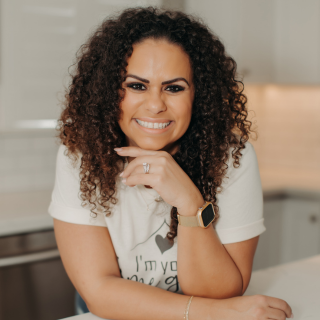
Heather Jones is a Corona, CA Realtor and digital listing specialist who helps homeowners sell their homes for top dollar and move into their next home with a clear, strategic plan. She specializes in working with growing families who are ready to move up from their first home into something that better fits their lifestyle. Known for her strong marketing and hands-on guidance, Heather helps her clients navigate every step of the process with confidence.
Heather Jones, Realtor, Digital Listing Specialist, Community Market Leader
Brokered by eXp Realty of California
DRE #02067219
661.607.6832