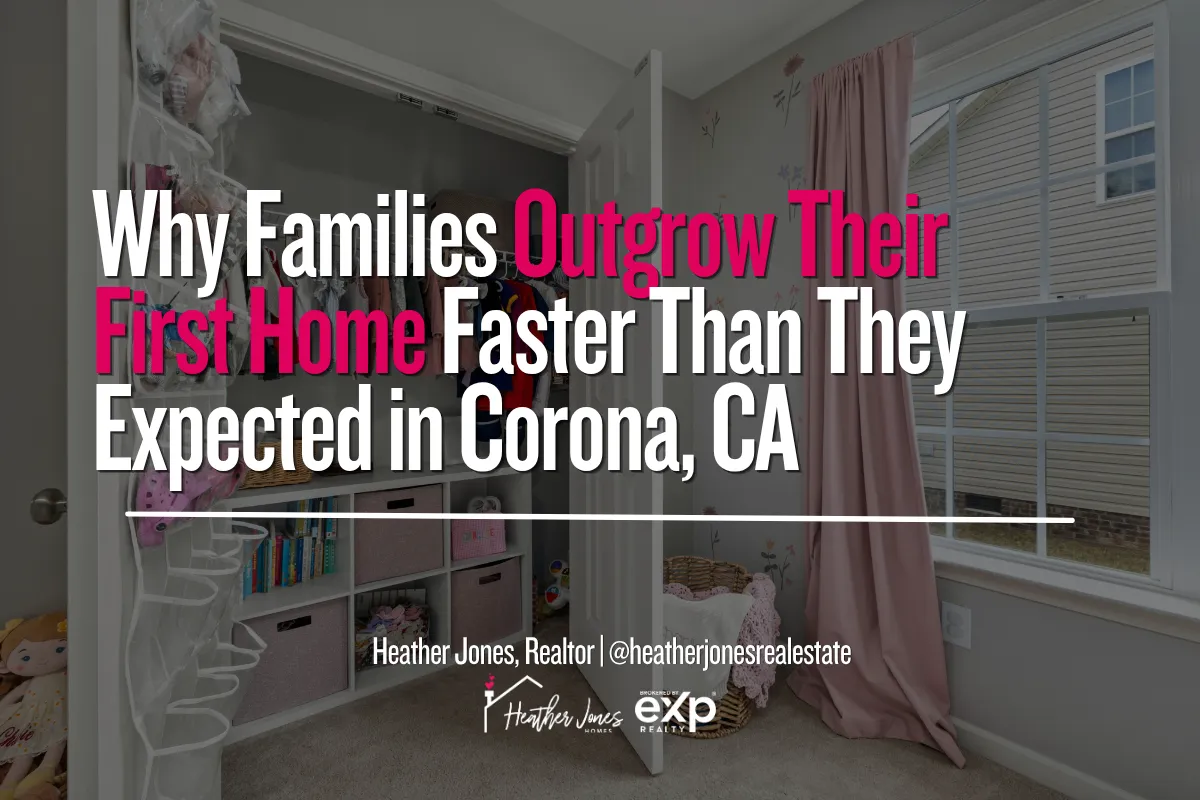
Why Families Outgrow Their First Home Faster Than They Expected
Why Families Outgrow Their First Home Faster Than They Expected
You Bought for Who You Were, Not Who You'd Become
Kids Take Up More Space Than You Think — In Every Way
The Way Families Use Their Homes Changed — and Most First Homes Weren't Built for It
The Kitchen and Common Space Crunch
The Signs You've Outgrown Your Home
Why Staying in Corona Is Usually the Right Call
What Families Say They Wish They Had Done Sooner
What to Think About Before You Start Looking
When most couples buy their first home, the house feels like plenty. Two bedrooms, maybe three. A backyard. A garage. Enough room to breathe after years of renting. You sign the papers, you move in, and for a while — maybe a long while — it works.
Then it doesn't.
Not in one dramatic moment. It happens in pieces. The second kid arrives and suddenly two kids in one room feels like a temporary situation that somehow became permanent. The sports equipment multiplies. The garage fills up. The kitchen table is covered with homework and shin guards and someone's science project. The backyard that felt fine two years ago now feels like it's barely big enough for a trampoline.
And then one day you're standing in the kitchen, everyone is home at the same time, and the house just feels loud and small and crowded in a way that makes you tired before dinner even starts.
That's the moment most families realize they've outgrown their first home. The part that surprises them is how fast it happened.
Here's why it happens faster than families expect — and what it actually means for your next move in Corona.
You Bought for Who You Were, Not Who You'd Become
This is the root of it. When you bought your first home, you were making a decision based on your life at that moment. Maybe you had one kid or no kids yet. Maybe you were both working and the house was more of a place to sleep and recharge than a full operating system for family life.
Your first home was the right choice for that version of your family. The problem is that families don't stay still.
In five to eight years, a couple can go from two adults with a plan to two adults with two or three kids, a dog, two sets of sports schedules, homework routines, work-from-home setups, and a social life that now requires room to host. The house doesn't grow with you. The needs do.
Most buyers don't fully picture what family life actually looks like at full capacity when they're standing in an empty house during a showing. You see square footage. You don't yet see what it looks like when every inch of that square footage is in use at the same time.
Kids Take Up More Space Than You Think — In Every Way
Here's something nobody tells you clearly before you have kids: children are not compact.
It starts with the stuff. Car seats, strollers, bikes, scooters, sports bags, cleats, helmets, pads, school backpacks, art projects, board games, LEGOs, and more sports equipment than you thought was possible for one household. All of that has to go somewhere. And in a first home with a two-car garage that was already holding your cars and your tools and your holiday decorations, there is no somewhere.
Then the kids get older and it shifts from physical stuff to space for life. Your son needs a place to do homework that isn't the kitchen table where his sister is doing hers. Your daughter needs a space to practice or decompress or just close a door and have a few minutes of quiet. You need a place to work from home that isn't a corner of the bedroom. Your spouse needs one too.
None of that was an issue when the house was mostly just the two of you. It becomes an issue fast once the family fills in around you.
I work with a lot of families in Corona who have kids in hockey and other competitive sports. By the time those kids are 10 or 11, the sheer volume of equipment alone — sticks, bags, skates, helmets, pads — has taken over whatever storage space the house had to offer. Add tournament weekends, early morning practices, and the need for a schedule that actually functions, and you start to see how the home itself either supports your family or works against it.
A house that works against you is exhausting in a way that's hard to name until you're in it.
The Way Families Use Their Homes Changed — and Most First Homes Weren't Built for It
Think about how different your home life looks compared to even ten years ago.
Remote work is part of normal life for a lot of families now. One or both parents working from home — even part of the time — requires dedicated space. Not a laptop on the couch. A real workspace where you can take calls, close a door, and actually get something done without a kid wandering into the background.
First homes rarely have that. A lot of them were designed in an era when the assumption was that everyone left for work in the morning and came back in the evening. A formal dining room that nobody uses, but no home office. A living room built for TV watching, but not for two adults who both need to be on video calls at the same time.
Add in the fact that kids are doing school online more than ever — whether through homeschool programs, supplemental learning, or hybrid schedules — and the demand for functional space inside the home has gone up significantly. The house you bought five years ago wasn't designed for what your family actually needs today.
That gap between what the house was built for and what your family actually needs is exactly why so many families in Corona feel like they've outgrown their home before they expected to.
If you want to understand what a home that actually functions for a busy family looks like, The Best Home Features for Busy Sports Families in Corona, CA is a good place to start — it covers the specific features that make a real difference day to day.
The Backyard Problem
This one is underestimated by almost every family I've worked with until they're living it.
A backyard in a first home is often fine on paper. It's a yard. It has grass. There's enough space for a small playset. When you bought the house, you probably pictured your kids playing out there and it sounded great.
What you couldn't fully picture was what that yard would actually look like two kids later, with a trampoline, a playhouse, a basketball hoop, and a dog who's already taken out half the grass. Or what it feels like to want to host a birthday party or a family gathering and realize there's just not enough space to do it comfortably.
The backyard becomes one of the most common points of frustration for growing families in first homes — and one of the biggest motivators when they finally decide it's time to move up. They're not looking for a mansion. They're looking for enough outdoor space that the family can actually use it.
The Shared Bedroom Situation
Let's talk about the shared room conversation, because it comes up constantly.
Some kids share a room and it's fine. For a season. At a certain age, with kids who have compatible sleep schedules and temperaments, sharing can work.
But by the time you have kids who are 7, 9, and 11 — or even just two kids who are different ages with different routines and different needs for sleep and personal space — the shared room stops being a minor inconvenience and starts being a real source of daily stress. For the kids and for the parents.
Bedtime becomes complicated. One kid has a later bedtime and wakes up the other one. One kid needs quiet to do homework while the other one wants to play. One kid is going through something hard at school and just needs somewhere to go that's theirs.
Those are real things that happen in real families. A house with enough bedrooms handles them without drama. A house without enough bedrooms handles them with tension every single night.
This is one of the signs that tells families it's time. Not just that the house is crowded in a general sense, but that the daily rhythms of family life are starting to fray because the home can't support them.
The Kitchen and Common Space Crunch
First homes often have kitchens built for cooking dinner, not for everything that actually happens in a kitchen when a family is fully operational.
Homework happens at the kitchen table because there's nowhere else. Snacks after school happen in the kitchen. The kids do a project in there. You're trying to make dinner while two other things are going on at the same time. The counter space disappears. The table is never just a table.
The same thing happens in the main living areas. A living room that felt spacious when it was just the two of you feels like a controlled chaos zone when there are four people, a dog, sports equipment that didn't make it to wherever it belongs, and everyone trying to do something different at the same time.
None of this is a parenting problem. It's a square footage problem.
The Signs You've Outgrown Your Home
Most families don't wake up one morning and decide they've outgrown their house. It builds. Here are the signs I hear most often from families in Corona who are finally ready to make a move:
You've reorganized and purged and bought more storage solutions and the house still feels full. Organization helps a home run more smoothly. It can't give you rooms that don't exist.
You avoid hosting because it's stressful. A holiday gathering or a birthday party that should be fun becomes logistically exhausting because the home can't hold it comfortably.
Mornings are harder than they should be. Not because your kids are difficult, but because there are four people trying to get ready in one bathroom on a schedule that doesn't have any slack built in.
The kids are asking for their own space. When a child starts saying they wish they had their own room, that's not just a want. That's a signal about where they are developmentally and what they need.
You feel the tension even when nothing is actually wrong. The house just hums at a higher stress frequency than it should. You don't feel like you can decompress at home because the home is always full and always active with no real quiet zone.
You've started looking at Zillow at night. That's not boredom. That's your brain telling you something.
If several of those feel familiar, you've likely outgrown your home — and the fact that it happened faster than you expected is completely normal. It happens to most families who bought during a stage of life that looked different from the one they're in now.
Why Staying in Corona Is Usually the Right Call
Once a family realizes they've outgrown their home, the next question is usually whether to move to a different city entirely. I wrote about this specifically in Why So Many Growing Families Are Staying in Corona, CA Instead of Moving Away, and the short version is this: most families who start looking around eventually come back to the same conclusion.
They don't want to leave Corona. They just want a home that fits.
And that home exists here. Corona has real range — from established neighborhoods with larger lots to newer master-planned communities built for active families. A family that has outgrown a 1,800 square foot starter home can find a 3,000+ square foot home with a pool, a proper backyard, a three-car garage, and actual dedicated workspace — and still be in the same city, in many cases in the same school district.
The community you've built, the sports programs your kids are in, the routines your family runs on — none of that has to reset just because the house stopped fitting.
Best Move-Up Neighborhoods in Corona, CA for Growing Families breaks down the specific areas worth looking at, including South Corona, Eagle Glen, Sycamore Creek, and Bedford.
What Families Say They Wish They Had Done Sooner
I hear this a lot. A family finally makes the move, gets into the right home, and within the first few months they say some version of the same thing: "We should have done this sooner."
Not because the old house was terrible. It wasn't. It was the right house for a different season. But once they're in a home where every kid has their own room, the backyard actually gets used, mornings run smoother, and they can have people over without stressing about it — the contrast is obvious.
The hesitation to move is usually tied to a few things: the low interest rate they don't want to give up, the uncertainty about whether they can afford it, and the general inertia of a big decision. Those are all real concerns worth thinking through carefully. But the cost of staying in a home that's working against your family is real too, even if it's harder to put a number on.
What Growing Families Wish They Had in Their Next Home goes into exactly what families say they wished they'd prioritized — it's a useful read before you start looking at anything.
What to Think About Before You Start Looking
Before you get serious about a move, a few things are worth getting clear on.
What is your current home actually worth right now? If you bought it four or five years ago, the answer may be higher than you think. That equity is what funds your move up.
What does the next home actually need to include to solve the problem? More bedrooms is the obvious answer, but there's usually more to it. A workspace that functions, a backyard with real room, a garage that fits life and not just cars. Getting specific about what you actually need makes the search much more focused.
Can you afford the move-up home without overextending? This is where a lot of families get stuck — they assume they can't swing it because rates are higher than they used to be. But the equity side of the equation changes things significantly for families who bought several years ago. How Much More House Can You Afford When Moving Up in Corona, CA? walks through how to think about this with real numbers.
What neighborhoods in Corona actually make sense for your family? Schools, commute, lot size, price point — these narrow the search fast. The Best Neighborhoods in Corona, CA for Families (2026 Guide) is a good place to start building that picture.
Frequently Asked Questions
How do I know for sure that I've outgrown my home and it's not just a phase?
If the house has felt consistently crowded for more than a year — not just during one busy season — and you've already tried the organizational fixes without real relief, you've outgrown it. A phase passes. Outgrowing a home doesn't fix itself.
Is it normal to outgrow a first home in five to seven years?
Very normal. Most families buy their first home before their family is fully formed. Five to eight years later, the kids are older, the needs are bigger, and the home that worked then simply wasn't designed for the life you're living now.
Does it make financial sense to move up if we still have a low interest rate?
It depends on your equity and your next purchase price, not just your current rate. Many families in Corona who bought four to six years ago have built enough equity that the move-up math works better than they expected. Run the real numbers before you assume it doesn't make sense.
What if we just add on or remodel instead of moving?
Sometimes that's the right answer. But remodeling is expensive, disruptive, and often can't solve the core problem — lot size, backyard space, or layout limitations that are built into the structure of the home. It's worth comparing what a remodel actually costs versus what a move-up home would cost before committing.
What are the most important things to get in a move-up home?
Every family is a little different, but the most common answers I hear are: a bedroom for every kid, at least one dedicated workspace, a backyard with room to actually use, and a garage that holds more than just cars. If your family is in sports, storage for equipment is usually high on the list too.
How do I find out what my current home is worth in today's market?
A real conversation with a local agent who knows the Corona market is the most accurate way to get that answer. I offer a no-pressure home valuation for families who want to know what they're working with before they decide anything.
Related Articles
Why So Many Growing Families Are Staying in Corona, CA Instead of Moving Away
Best Move-Up Neighborhoods in Corona, CA for Growing Families
The Best Home Features for Busy Sports Families in Corona, CA
How Much More House Can You Afford When Moving Up in Corona, CA?
The Best Neighborhoods in Corona, CA for Families (2026 Guide)
The Bottom Line
Outgrowing your first home faster than you expected isn't a mistake. It means your family is growing and your life is fuller than it was when you bought. The house served its purpose. Now the question is whether you let it keep working against you, or whether you find a home that actually fits the family you are right now.
For most families in Corona, that home is here. In the same city. In a neighborhood with more room, better layout, and a backyard that finally gets used. You don't have to give up what you've built to get it.
If you want to know what your current home is worth and what the move-up path realistically looks like for your family, I'm here to walk through it with you — no pressure, just real numbers and a clear picture of your options.
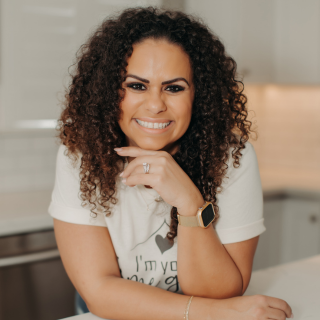
Heather Jones is a Corona, CA Realtor and digital listing specialist who helps homeowners sell their homes for top dollar and move into their next home with a clear, strategic plan. She specializes in working with growing families who are ready to move up from their first home into something that better fits their lifestyle. Known for her strong marketing and hands-on guidance, Heather helps her clients navigate every step of the process with confidence.
Heather Jones, Realtor, Digital Listing Specialist, Community Market Leader
Brokered by eXp Realty of California
DRE #02067219
661.607.6832