
Should I Sell Before I Buy or Buy First in Corona, CA?
Should I Sell Before I Buy — or Buy First in Corona, CA?
Why This Decision Feels So Hard
Path One: Sell First, Then Buy
Path Two: Buy First, Then Sell
The Financing Options That Make Buying First Possible
So Which Path Is Right for You?
What the Corona Market Means for This Decision Specifically
Practical Steps to Take Right Now
This is the question that stops more families in their tracks than almost any other part of the move-up process.
You know you need a bigger home. You know you have equity. You're ready to make a move. And then someone asks — are you going to sell first or buy first? — and suddenly the whole thing feels like a logic puzzle with no clean answer.
It doesn't have to be that complicated. Both paths are viable. Each one fits a different financial situation and a different comfort level with risk. The key is understanding what each path actually looks like in today's Corona market, what your options are for bridging the timing gap, and which approach fits your specific situation.
Here's the honest breakdown.
Why This Decision Feels So Hard
The timing challenge in a move-up transaction is real. You are trying to coordinate two separate real estate transactions — selling one home and buying another — in a market where you don't control the timeline on either side.
If you sell first, you know exactly what you have to work with financially. But you're also under pressure to find and close on your next home quickly, sometimes before you've found the right one.
If you buy first, you get to take your time finding the right home without deadline pressure. But you're taking on financial exposure — either carrying two mortgages simultaneously, or structuring alternative financing — until your current home sells.
Neither path eliminates the tension entirely. What the right approach does is minimize the tension that matters most to you, given your specific financial picture.
Let's look at both sides clearly.
Path One: Sell First, Then Buy
This is the more financially conservative approach and the one most families default to — especially if carrying two mortgage payments simultaneously is not a realistic option.
How it works: You list your current home, accept an offer, and use the sale proceeds as your down payment on the next home. The transactions either close simultaneously or you negotiate a rent-back agreement that lets you stay in your sold home for up to 60 days while you find and close on the next one.
The advantages are real. You know exactly how much equity you have to work with before you make an offer on the next home. Your offer on the next purchase is not contingent on selling — which makes you a stronger buyer and eliminates one of the most common reasons sellers reject offers. You are not carrying two mortgages at any point, which removes a significant financial stress.
The trade-offs are also real. Once you have an accepted offer on your current home and a closing date approaching, the clock is running. You need to find, make an offer on, and get into contract on your next home within a tight window. In a market where the right move-up homes are not abundant, that pressure can push families toward a home that is good enough rather than the right one.
The rent-back strategy helps significantly. In California, a seller rent-back agreement allows you to sell your home, close escrow, collect your proceeds, and then stay in the home for up to 60 days while you search for and close on your next property. You essentially become a short-term tenant in your own home — which buys you time without the financial exposure of carrying two properties simultaneously.
Negotiating a rent-back is not always possible — it depends on the buyer's situation and financing — but it is worth pursuing as part of the selling strategy if timing flexibility is important to you. A buyer using conventional financing can typically accommodate a rent-back of up to 60 days. I build this into the negotiation strategy for clients who need it.
Path Two: Buy First, Then Sell
This approach gives you more control over the buying side of the transaction and eliminates the pressure of finding the right home on a deadline. It comes with more financial complexity, but for families in the right equity position, it is absolutely manageable.
How it works: You identify and go under contract on your next home before listing your current one. To fund the down payment and carry the new purchase until your current home sells, you use one of several financing strategies — more on those below.
The advantages are meaningful. You can take your time finding the right home without a closing deadline creating pressure. You move into the new home on your own timeline. Your current home can be vacated, staged properly, and listed in the best possible condition — which typically produces a better selling outcome than trying to sell a home while your family is still living in it with kids, pets, sports equipment, and all the beautiful chaos of real life.
The trade-offs are also real. You are taking on temporary financial exposure. Depending on which financing strategy you use, you may be carrying two mortgage payments for a period of time, or paying interest on a bridge loan or HELOC until your current home sells. If your current home takes longer to sell than expected, that cost adds up.
This path works best for families who have significant equity, stable income, and a realistic understanding of what their current home will sell for and how long it will take. It requires more upfront planning and coordination — but for the right family, it produces a smoother overall experience than the sell-first pressure cooker.
The Financing Options That Make Buying First Possible
If you want to buy before selling, you have several tools available in today's California market. Here is an honest look at each one.
HELOC (Home Equity Line of Credit)
A HELOC lets you borrow against the equity in your current home and use those funds as the down payment on the next one. When your current home sells, you pay off the HELOC with the proceeds.
HELOC rates as of mid-2026 are running around 7.3% to 7.5% — significantly lower than bridge loan rates. They are a revolving line of credit, so you only pay interest on what you actually draw. They take two to six weeks to set up, which means you need to plan ahead.
The critical timing rule with a HELOC: you must have it open and funded before your current home goes on the market. Most lenders will freeze or refuse to approve a HELOC once your home is listed for sale, because a listing signals imminent payoff and eliminates their collateral. If you are considering this strategy, talk to your lender before you call your agent.
To qualify, you generally need a credit score in the high 600s and at least 15% to 20% equity in your current home. Your debt-to-income ratio also needs to support the HELOC payment alongside your existing mortgage and the new purchase mortgage — which is where some families run into qualification challenges.
Bridge Loan
A bridge loan is a short-term lump-sum loan specifically designed for buying before selling. It uses your current home's equity as collateral, funds quickly — sometimes within 48 to 72 hours — and is paid off when your current home sells.
The trade-off is cost. Bridge loan rates in 2026 are running roughly 8.5% to 11.5% annually, plus origination fees of 1% to 2%. On a $200,000 bridge loan held for six months, you are looking at approximately $8,500 to $11,500 in interest costs. That is the price of speed and flexibility — it is real money, but for families who need to move quickly on a specific home, it can be worth it.
Bridge loans are interest-only during the loan term, which keeps the monthly payment manageable. Most lenders require 20% to 30% equity in your current home and a credit score of 680 or above. The bigger qualification hurdle is debt-to-income ratio — lenders want to see that you can carry both mortgages simultaneously, which requires solid income.
Contingent Offer
A contingent offer means you make an offer on the next home with a clause that says the purchase is contingent on your current home selling. If your home doesn't sell within the agreed timeframe, the deal falls apart.
Contingent offers are the simplest approach logistically, but they come with a meaningful competitive disadvantage. Sellers in Corona — and especially in the move-up price range where motivated OC buyers are often in the mix — strongly prefer non-contingent buyers. A contingent offer will typically lose to a comparable non-contingent offer even at a slightly higher price, because sellers don't want the uncertainty of your home's sale affecting their transaction.
Contingent offers work best when your current home is already under contract, or when you are looking in a slower-moving segment of the market where the seller has limited interest and more patience. In a well-priced move-up neighborhood in south Corona, counting on a contingent offer to win you the right home is a risk.
So Which Path Is Right for You?
The honest answer is that it depends on three things: your equity position, your income and DTI, and your personal comfort with financial exposure.
Sell first tends to be the better fit if: You don't have significant liquid reserves beyond your home equity. Your debt-to-income ratio would not support carrying two mortgages even temporarily. You are in a price range where the next home is not so scarce that you need unlimited time to find it. The idea of carrying two properties — even briefly — creates stress that outweighs the benefit of flexibility.
Buy first tends to be the better fit if: You have strong equity and stable income. You want to find the right home without deadline pressure. You need to move into the new home before listing the current one — which is often the case for families who can't show a lived-in home well while kids and sports schedules are running at full capacity. You have already identified the right next home and don't want to lose it.
For many Corona families in the move-up range, the sell-first-with-rent-back strategy is the cleanest path. You sell your current home, negotiate a 30 to 60 day rent-back, collect your proceeds, and use that window to find and close on the right next home — all without carrying two mortgages or paying bridge loan interest.
For families with strong equity who want maximum flexibility on the buying side, a HELOC opened before listing is often the most cost-effective buy-first tool available.
The right answer for your situation depends on your specific numbers — and the only way to get those numbers is to have a real conversation that starts with what your current home is worth and what equity you are working with. That is exactly the kind of conversation I have with every family before we start the process.
What the Corona Market Means for This Decision Specifically
A few things about the current Corona market are worth keeping in mind as you think through this.
The move-up inventory in south Corona — the neighborhoods where most growing families want to land — is moderate but not abundant. When the right home comes available in Eagle Glen, Sycamore Creek, or Bedford, it moves within 30 to 50 days. If you are under selling pressure when that home hits the market, you may not be in the best position to make a clean, competitive offer.
That said, this is not the frenzy market of 2021. Sellers in Corona are not receiving ten offers in 48 hours anymore. In most cases, you have enough time to move thoughtfully rather than reactively — which means the sell-first-with-rent-back strategy is often workable if you have your next home search well underway before you accept an offer on your current home.
The OC buyer pool in Corona's move-up range is also worth understanding. These buyers are equity-rich and often non-contingent. If you are a seller trying to negotiate a rent-back or get maximum price, presenting a clean listing with professional marketing to that buyer pool — not just local MLS traffic — is what produces the best result. That is the core of the marketing strategy I build for every seller.
For a full picture of what your Corona home is worth right now and what equity you have to work with, What Is My Corona, CA Home Worth in Today's Market? is the right place to start. And How Much More House Can You Afford When Moving Up in Corona, CA? walks through how the equity and payment math actually works once you have that number.
Practical Steps to Take Right Now
Whether you lean toward selling first or buying first, the starting point is the same: get clear on your numbers before you make any moves.
Know what your current home is worth. Not a Zillow estimate — a real valuation from someone who knows the Corona market and can pull actual comparable sales in your specific neighborhood.
Know your equity position. Your home's current value minus your remaining mortgage balance gives you a rough equity number. Your agent can help you build a net proceeds estimate that accounts for selling costs so you know what you would actually walk away with.
Know your budget for the next home. Once you have your net proceeds, a conversation with a lender about what you qualify for — and what the monthly payment looks like with your equity applied as a down payment — gives you a realistic price range for the next purchase.
Know what is available in the neighborhoods you are targeting. Understanding what the move-up inventory actually looks like in south Corona, Eagle Glen, Sycamore Creek, or Bedford right now tells you how much time pressure you are actually under on the buying side.
With those four things clear, the sell-first versus buy-first decision becomes much less abstract. It becomes a logistics question with a right answer for your specific situation — not a source of anxiety.
If you want help working through any of those steps, Is Right Now a Good Time to Sell My Home in Corona, CA? gives you the current market context, and Best Move-Up Neighborhoods in Corona, CA for Growing Families helps you start picturing where you are headed. For families still working through whether the timing is right at all, What Families Regret Most About Waiting Too Long to Move and Why So Many Growing Families Are Staying in Corona, CA Instead of Moving Away are both worth your time.
Frequently Asked Questions
Is it better to sell before buying or buy before selling in Corona right now? For most families in Corona, the sell-first-with-rent-back strategy is the cleanest path — you know your equity, your offer on the next home is non-contingent, and you avoid carrying two mortgages. Families with strong equity and income who want more flexibility on the buying side may benefit from a HELOC strategy to buy first. The right answer depends on your specific financial situation.
What is a rent-back and how does it work in California? A rent-back agreement lets you sell your home, close escrow, and collect your proceeds, then continue living in the home for up to 60 days as a short-term tenant while you find and close on your next property. In California, the rent is typically capped at the buyer's PITI (principal, interest, taxes, and insurance). It is one of the most useful tools for managing the timing gap in a move-up transaction.
What is a bridge loan and is it worth the cost? A bridge loan is short-term financing — usually six to twelve months — that uses your current home's equity to fund the down payment on your next home before your current home sells. Rates in 2026 are running roughly 8.5% to 11.5%, which makes it significantly more expensive than a HELOC. It funds quickly, sometimes within 48 hours, and is best suited for families who need to move fast on a specific home and have the equity and income to qualify.
Can I use a HELOC to buy my next home before selling my current one? Yes — but timing is critical. Most lenders will freeze or refuse to approve a HELOC once your home is actively listed for sale. If you want to use a HELOC as a bridge, it must be opened and funded before your home goes on the market. HELOC rates in 2026 are running around 7.3% to 7.5%, making them significantly less expensive than bridge loans for families who qualify.
Will a contingent offer work in Corona's current market? It depends on the situation. In today's balanced market, sellers are more open to contingencies than they were during the frenzy years — but they still prefer non-contingent buyers, especially in south Corona neighborhoods where motivated OC buyers are often competing. A contingent offer works best when your current home is already under contract, or when you are looking at a property that has been sitting on the market with limited interest.
How do I know which path is right for my family? Start by getting your current home valued and your equity calculated, then have a conversation with a lender about what you qualify for on the buying side. With those numbers in hand, a conversation with your agent about the current move-up inventory and timing gives you everything you need to make a confident decision. That is the conversation I have with every family before we start the process — reach out and we can walk through it together.
Can I negotiate a rent-back with any buyer? Not always — it depends on the buyer's situation and financing. Buyers using conventional financing can typically accommodate up to 60 days. Cash buyers may be more or less flexible depending on their timeline. Making a rent-back part of the negotiation strategy upfront — rather than asking for it after the fact — is the most effective approach. I build this into the listing strategy for clients who need it.
Related Articles
How Much More House Can You Afford When Moving Up in Corona, CA?
Best Move-Up Neighborhoods in Corona, CA for Growing Families
Why So Many Growing Families Are Staying in Corona, CA Instead of Moving Away
The Bottom Line
There is no universally right answer to sell-first versus buy-first. There is a right answer for your family based on your equity, your income, your risk tolerance, and what is actually available in the move-up market right now.
What I can tell you is that the families who get clear on their numbers first — home value, equity, net proceeds, and move-up budget — find the decision far less stressful than the ones who try to figure it out on the fly once they are already emotionally committed to a specific home.
Get the numbers first. Then make the call. I'm here to help you do exactly that.
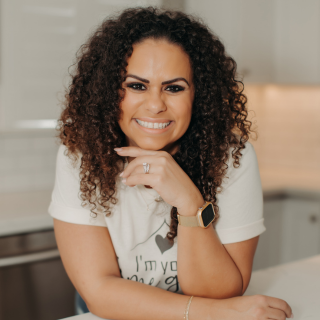
Heather Jones is a Corona, CA Realtor and digital listing specialist who helps homeowners sell their homes for top dollar and move into their next home with a clear, strategic plan. She specializes in working with growing families who are ready to move up from their first home into something that better fits their lifestyle. Known for her strong marketing and hands-on guidance, Heather helps her clients navigate every step of the process with confidence.
Heather Jones, Realtor, Digital Listing Specialist, Community Market Leader
Brokered by eXp Realty of California
DRE #02067219
661.607.6832