
Is 2026 a Good Time to Buy a Home in Corona, CA?
Is 2026 a Good Time to Buy a Home in Corona, CA?
What the Corona Market Looks Like for Buyers Right Now
Why Corona Specifically Still Makes Sense
What Is Working in Buyers' Favor Right Now
The Rate Question — And What to Actually Do About It
Who Is Buying in Corona Right Now
How to Buy Successfully in This Market
What Happens If You Keep Waiting
If you have been watching the market and waiting for a clear signal that the time is right to buy in Corona, here is the honest answer: the signal you are waiting for may not come in the form you expect.
Rates are not dropping dramatically. Prices are not falling. Inventory is not suddenly abundant. What the Corona market is offering buyers right now is something different — and for the right buyer with realistic expectations and solid preparation, it is actually a workable opportunity.
This post gives you the full picture: where the market stands in July 2026, what is genuinely working in buyers' favor, what the real challenges are, and what it takes to get into the right home this year without regret.
What the Corona Market Looks Like for Buyers Right Now
The Corona market in mid-2026 is balanced, with some nuance worth understanding.
The citywide median sale price is running around $780,000 to $800,000 for single-family homes, with homes averaging 44 to 68 days on market depending on the data source and neighborhood. South Corona — the master-planned corridor that draws the most family buyer demand — is sitting at a median closer to $882,000. Homes are selling at approximately 99.3% of asking price, which tells you that correctly priced homes are still getting close to full value. About 322 homes sold in Corona in May 2026, up 40% from the same month last year — which is a meaningful signal that buyer activity is picking back up after a slower stretch.
On the rate side, buyers are dealing with a tougher environment than earlier in the year. The 30-year fixed rate is currently averaging between 6.49% and 6.77% depending on the lender and loan type, with the Freddie Mac weekly survey coming in at 6.49% as of July 9th. Rates have drifted upward since the June Federal Reserve meeting, where policymakers signaled a potential rate hike later in 2026 rather than the cut many buyers had been hoping for. Most forecasters now expect rates to stay above 6% through the end of 2026 and into 2027.
That is not the rate environment buyers were hoping for. But it is the one they are working with — and understanding what it means practically is more useful than wishing it were different.
Why Corona Specifically Still Makes Sense
Even at current rates and prices, Corona's fundamental value proposition for buyers has not changed. In fact, in several ways it has gotten stronger.
The affordability gap versus Orange County is significant and growing. Orange County's median home price is now above $1.1 million, with cities like Irvine north of $1.5 million. A comparable single-family home in south Corona — similar square footage, similar school quality, similar age — typically runs $200,000 to $400,000 less. That gap is what keeps a consistent stream of OC relocators flowing into Corona, and it is what makes the city one of the most compelling value plays in all of Southern California for families who want quality, space, and access without a coastal price tag.
Your money goes meaningfully further here. In most OC cities at $850,000, you are looking at a smaller home, older construction, or a condo with HOA fees. In south Corona at the same price point, you can find a 2,400 to 3,000 square foot single-family home in a master-planned community with a yard, a two or three-car garage, and access to community amenities. That difference in what your budget actually buys is real and it matters for families thinking long-term about space, lifestyle, and resale.
The location advantage is genuine. I have written about this in detail in Why Corona, CA Is One of the Best Places to Live in Southern California, but the short version is this: from most parts of Corona you can reach OC beaches in about 45 minutes, Disneyland in about 30, and Big Bear in about an hour. You are not trading access to Southern California life to afford a home here. You are trading coastal proximity — and for most families, that trade makes complete sense.
The family and sports culture is real. Corona has a depth of youth athletics — hockey, baseball, soccer, volleyball, competitive club sports — that is genuinely hard to find at this price point anywhere in Southern California. For families whose kids are already in sports or heading that direction, this is not a minor amenity. It is a meaningful part of the daily quality of life here and a big reason families who move to Corona tend to stay.
What Is Working in Buyers' Favor Right Now
Several conditions in the current market are specifically beneficial for prepared buyers.
Inventory has improved from the frenzy-era lows. With 388 homes available in Corona in May 2026 and nearly 825 active listings across the metro area, buyers have more options than they did in 2021 and 2022. That means you are not forced to choose from three homes in your price range and settle for the least bad option. You can take the time to find the right home — and walk away from the wrong ones without feeling like you have lost your only chance.
The bidding war environment has calmed significantly. During peak frenzy, buyers were routinely waiving inspections, waiving appraisal contingencies, and offering $50,000 to $100,000 over asking just to compete. That is not today's market. Well-priced homes in desirable neighborhoods still move, and some still attract multiple offers. But buyers are largely back to being able to include standard contingencies, conduct inspections, and negotiate without the emotional pressure that defined 2021 and 2022. That is a meaningful quality-of-life improvement in the buying process.
Nearly half of active listings have seen at least one price reduction. That tells you there is negotiating room in the right situations. A home that has been sitting for 45 or 60 days with a price reduction is a very different negotiating conversation than a home that just listed and has three offers. Buyers who are patient and specific about what they need can find real leverage in this market.
Prices are forecast to hold and appreciate modestly. The expected crash in Corona has not materialized and is not projected to. Current forecasts point to 2% to 4% appreciation through the rest of 2026. That means buying today is buying at a lower price than buying next year — and waiting for conditions to improve on the rate side may come with a higher purchase price attached.
Summer can be a buyer's advantage. The spring rush has passed. Families who needed to be in a home before the school year have largely already transacted. What remains in active inventory heading into July and August is a combination of homes that came to market late and sellers who are now more motivated than they were in April. For buyers who are ready to move, the summer months are often a better time to find a motivated seller and negotiate terms than the peak spring competition window.
What the Real Challenges Are
Being honest about the obstacles matters just as much as being honest about the opportunities.
Rates are the biggest headwind right now. At 6.49% to 6.77% on a 30-year fixed, the monthly payment math is demanding. On a $800,000 purchase with 10% down — a $720,000 loan — the monthly principal and interest payment is approximately $4,710 at 6.6%. Add property taxes of roughly $8,800 per year ($733/month), homeowner's insurance, and HOA fees where applicable, and the total monthly housing cost for many Corona homes is landing in the $5,800 to $6,800 range. That requires meaningful household income to carry comfortably — generally in the $185,000 to $210,000 range depending on your other obligations and down payment.
Buyers who are stretching to reach that number need to be honest with themselves about what stretch feels manageable versus what creates financial stress that follows them into the home.
The Fed's latest signals are not buyer-friendly. The June Fed meeting did not produce the rate cut buyers were hoping for. Policymakers signaled that inflation remains too elevated, and most now expect a rate hike may be necessary later in 2026 rather than relief. That does not mean rates will spike dramatically, but it does mean buyers who have been waiting for rates to come down before acting may be waiting longer than they expected — and potentially at higher prices.
Down payment accumulation remains a real barrier for first-time buyers. A 10% down payment on a $780,000 home is $78,000. A 20% down payment — which eliminates private mortgage insurance — is $156,000. Saving that kind of money while renting in Southern California is genuinely hard, and it is the primary reason a lot of qualified buyers on the income side are not yet in the market. Programs like CalHFA's down payment assistance are worth understanding if you are in this position.
Mello-Roos and HOA fees can add significantly to your true monthly cost. Many of the newer master-planned communities in south Corona carry Mello-Roos Community Facilities District taxes that typically run $1,500 to $4,000 or more per year on top of base property taxes. HOA fees in these communities often add another $150 to $400 per month. These numbers belong in your budget from the beginning — not as a surprise during escrow. Always ask about Mello-Roos before making any offer on newer construction or master-planned community homes.
Competition still exists for the right homes. The balanced market does not mean well-priced homes in strong south Corona neighborhoods sit forever. Homes that are priced correctly, in good condition, and in desirable school zones still generate real interest and can move in two to four weeks. Being pre-approved, specific about your priorities, and ready to act when the right home appears is not optional.
The Rate Question — And What to Actually Do About It
Most buyers are carrying around the same basic anxiety: rates are too high and they are waiting for them to come down before buying. That is a completely understandable feeling, and it is also a strategy that carries real risk.
Here is what the data actually says about waiting for rates in this environment. Forecasters at Fannie Mae and the MBA both project 30-year fixed rates to stay near 6.4% to 6.5% through the rest of 2026 and into 2027. The Fed is now signaling potential hikes rather than cuts. Rates are not projected to fall meaningfully on any near-term timeline.
Meanwhile, Corona home prices are forecast to appreciate 2% to 4% through the end of the year. A home that costs $820,000 today may cost $835,000 to $853,000 by January 2027 — at the same or potentially higher rate. Waiting for a better rate and getting both a higher price and a similar rate is one of the more common outcomes buyers experience when they stay on the sidelines.
The phrase that holds up well in this environment is one lenders use regularly: marry the house, date the rate. The home you buy today can be refinanced when rates improve. The price you pay today will not reset downward while you wait. If the payment works at current rates and the home is right, the case for waiting is weaker than it feels in the moment.
That said — if the payment genuinely does not work at your current income and down payment, that is a real constraint and not something to push through. Getting clear on your actual budget before you start looking is the most important first step. How Much More House Can You Afford When Moving Up in Corona, CA? walks through how to think about that math specifically.
Who Is Buying in Corona Right Now
Understanding who your competition is as a buyer gives you a realistic picture of what you are working with.
Orange County relocators are the most motivated and often best-funded buyers in Corona's move-up price range — roughly $850,000 to $1.2 million. These are families selling $1.1 million to $1.4 million OC homes and buying in south Corona for more space at a lower price, while maintaining easy access to OC via the 91 and 241 corridors. They are often equity-rich from their OC sale, which makes them strong competitors for the right homes.
Local move-up buyers — families already in Corona who have outgrown their first home — make up a meaningful share of the mid-range move-up market. They know the city, are strongly motivated by the fit problem their current home creates, and often have solid equity from a first home purchased several years ago.
First-time buyers are most active in the entry-level range — roughly $620,000 to $720,000 — primarily in North and Central Corona. This segment is the most rate-sensitive and the most likely to benefit from CalHFA and other down payment assistance programs.
Remote and hybrid workers from Los Angeles who want more space than LA affords, at a price point that makes homeownership achievable, remain a consistent presence in the Corona buyer pool.
How to Buy Successfully in This Market
Buyers who are getting into the right homes in mid-2026 are not doing anything unusual. They are executing the basics well and consistently.
Get pre-approved before you start looking seriously. Not pre-qualified — actually pre-approved, with income verification, credit review, and an approval letter from a lender for a specific loan amount. In a market where well-priced homes in good school zones still move in two to four weeks, showing up without a pre-approval puts you at a competitive disadvantage from the start.
Know your full monthly cost — not just the mortgage payment. Principal, interest, property taxes, homeowner's insurance, HOA, and Mello-Roos where applicable. These numbers together tell you what you are actually committing to each month. Work backward from a monthly payment you are genuinely comfortable with, not forward from a maximum loan approval.
Get specific about what you need before you start touring. Buyers who know their non-negotiables — number of bedrooms, minimum backyard size, garage configuration, school zone, commute tolerance — make decisions faster and with more confidence than buyers who are open to anything. In a market with moderate inventory, knowing what actually matters to your family means you can recognize the right home quickly instead of second-guessing every option.
Learn the neighborhoods before you start scheduling showings. South Corona, Eagle Glen, Sycamore Creek, Bedford, Sierra del Oro, and North Corona are meaningfully different in terms of price, lot size, HOA structure, school assignments, Mello-Roos exposure, and community feel. The Best Neighborhoods in Corona, CA for Families (2026 Guide) and Best Move-Up Neighborhoods in Corona, CA for Growing Families are both worth reading before your first showing so every tour is productive.
Work with someone who knows the local market specifically. Riverside County has nuances that matter — Mello-Roos district maps, school boundary specifics, neighborhood-level price dynamics, and a buyer pool that includes motivated OC equity sellers — that require genuine local knowledge to navigate well. An agent who knows these details is not a commodity in this market.
What Happens If You Keep Waiting
This deserves a direct answer, because a lot of buyers in Corona have been sitting on the sidelines for two or three years now.
If you are waiting for rates to fall to 5% or below before buying, you are waiting for something most credible forecasters are not projecting on any near-term timeline. If you are waiting for prices to drop significantly, the data does not support that outcome either — the crash that many predicted in 2023, 2024, and 2025 did not happen, and inventory remains too constrained for a meaningful price correction.
What tends to happen to buyers who wait without a specific, data-grounded reason is this: the home they could have bought last year costs more this year. The home they are considering this year will likely cost more next year. And the years they spent in a home that did not fit — or renting while building no equity — are years they cannot get back.
The right time to buy is when the home is right, the payment is workable at your current income and down payment, and the life circumstances support the move. Not when some combination of external market conditions hits a number you have decided on. Those conditions may not align the way you are hoping — and the buyers who wait for perfect tend to look back and wish they had moved when good was available.
For families considering Corona specifically and still working through whether this is the right city, Why So Many Growing Families Are Staying in Corona, CA Instead of Moving Away and Why Corona, CA Is One of the Best Places to Live in Southern California give you a full picture of what life here actually looks like day to day.
And if you are already in Corona and thinking about a move-up rather than a first purchase, What Is My Corona, CA Home Worth in Today's Market? is where to start — because your equity position is the most important variable in your buying power right now.
Frequently Asked Questions
Is Corona a buyer's or seller's market in July 2026? It is a balanced market. Homes are selling at approximately 99.3% of asking price, which means correctly priced homes are moving near full value. Days on market average 44 to 68 days depending on the neighborhood and price point. Well-priced homes in desirable south Corona neighborhoods with strong schools still move within a few weeks and sometimes attract multiple offers. Overpriced homes are sitting. Prepared buyers have real options and more negotiating room than they did in 2021 and 2022.
What is the median home price in Corona right now? Citywide, the median sale price for single-family homes is running around $780,000 to $800,000 as of mid-2026. South Corona's median is closer to $882,000. North and Central Corona run lower, generally in the $620,000 to $720,000 range. The right number for your search depends on which neighborhoods and price range fit your priorities.
What are mortgage rates right now and where are they headed? The 30-year fixed rate is currently averaging between 6.49% and 6.77% depending on the lender. The Freddie Mac weekly average as of July 9th was 6.49%. Most forecasters project rates to stay above 6% through the rest of 2026 and into 2027, with the Fed signaling a potential rate hike rather than a cut later this year. A dramatic drop in rates is not something current forecasts support in the near term.
How much do I need to earn to buy a home in Corona in 2026? At the $800,000 price point with 10% down and current rates near 6.6%, the total monthly housing cost including principal, interest, property taxes, insurance, and typical HOA runs roughly $5,800 to $6,800 depending on the specific home and neighborhood. Standard affordability guidelines suggest a household income in the $185,000 to $210,000 range to carry that payment comfortably. Entry-level homes in North Corona at $650,000 to $700,000 have a lower bar, and down payment assistance programs can reduce the upfront cost for first-time buyers who qualify.
What are Mello-Roos taxes and do all Corona homes have them? Mello-Roos are Community Facilities District taxes assessed in many newer master-planned communities to fund infrastructure, schools, and public services. Not all Corona homes carry them — most older neighborhoods and much of North and Central Corona generally do not. In newer South Corona communities, Mello-Roos can add $1,500 to $4,000 or more per year on top of base property taxes. Always ask specifically about Mello-Roos before making an offer on any newer construction or master-planned community home. It belongs in your monthly cost calculation from day one.
Should I wait for interest rates to drop before buying in Corona? Most credible forecasts do not project a meaningful near-term drop in rates — and the Fed's most recent signals point to potential hikes, not cuts, later this year. If you wait for rates to improve significantly, you are likely paying a higher home price when you do buy, which may fully offset the savings from the lower rate. If the payment is workable today and the home is right, the case for waiting is weaker than it feels. The decision should be grounded in your actual financial picture, not a rate target.
Is Corona a good destination for families relocating from Orange County? Yes — consistently one of the strongest options for OC relocators in the Inland Empire. The combination of meaningfully lower prices for comparable homes, strong schools, a genuine family and sports culture, and straightforward access to OC via the 91 and 241 corridors makes Corona the top relocation destination from OC in the region. You typically get $200,000 to $400,000 more home in South Corona compared to a comparable property in most OC cities.
What first-time buyer programs are available in Corona? CalHFA (California Housing Finance Agency) offers low-interest first mortgages and down payment assistance for qualifying buyers meeting income and credit guidelines. FHA loans allow down payments as low as 3.5% for buyers with credit scores of 580 or above. VA loans require no down payment for eligible veterans and active military. Working with a lender who knows these programs before you start searching tells you exactly what you have to work with — and sometimes opens up options buyers did not know they had.
Related Articles
Why Corona, CA Is One of the Best Places to Live in Southern California
The Best Neighborhoods in Corona, CA for Families (2026 Guide)
Best Move-Up Neighborhoods in Corona, CA for Growing Families
How Much More House Can You Afford When Moving Up in Corona, CA?
Why So Many Growing Families Are Staying in Corona, CA Instead of Moving Away
The Bottom Line
2026 is a workable time to buy in Corona — for buyers who go in with accurate expectations, a realistic budget, and genuine preparation. It is not a perfect market. Rates are elevated and not dropping dramatically. Prices are holding. Competition still exists for the right homes.
But Corona's value proposition — more home for your money, strong schools, a genuine family culture, and meaningful affordability relative to Orange County — has not changed. What has changed is that prepared buyers now have more options, more time to make a good decision, and real negotiating room in the right situations.
The buyers who move forward on that basis, with honest expectations and solid preparation, are the ones who look back glad they did not wait another year.
If you want to understand what your buying options actually look like right now — what neighborhoods fit your priorities, what the payment math looks like at your down payment and income level, and what is actually available in the Corona market today — I'm here for that conversation.
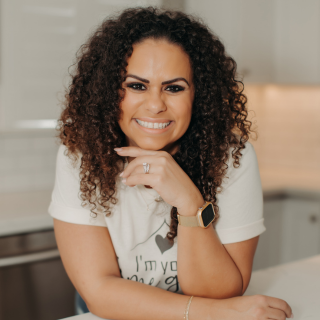
Heather Jones is a Corona, CA Realtor and digital listing specialist who helps homeowners sell their homes for top dollar and move into their next home with a clear, strategic plan. She specializes in working with growing families who are ready to move up from their first home into something that better fits their lifestyle. Known for her strong marketing and hands-on guidance, Heather helps her clients navigate every step of the process with confidence.
Heather Jones, Realtor, Digital Listing Specialist, Community Market Leader
Brokered by eXp Realty of California
DRE #02067219
661.607.6832


