What Actually Adds Value Before Selling
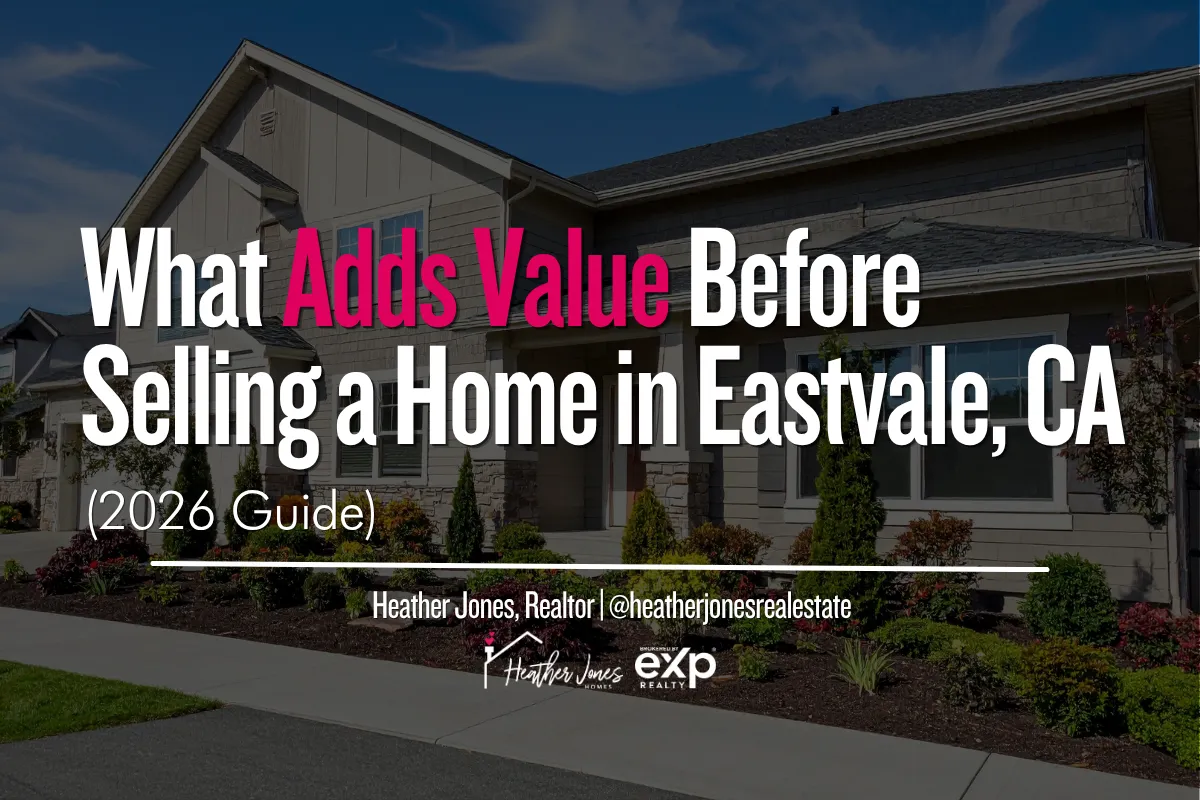
What Actually Adds Value Before Selling Your Home in Eastvale, CA
(What’s Worth It—and What’s Not)
If you’re getting ready to sell your home in Eastvale, California, you’ve probably asked yourself:
“What should I fix or update before listing?”
Because you want top dollar—but you don’t want to waste time or money on things that won’t pay off.
And here’s the truth most sellers don’t hear:
Not everything you do adds value.
Some updates help your sale price.
Some just cost you money.
If you’re still deciding whether now is even the right time to sell, start here first:
Should you sell your home in Corona right now or wait?
This guide breaks down what actually matters—so you can focus on the right improvements and skip the rest.
What “Adding Value” Really Means When Selling
Before we get into updates, let’s get clear on this:
Adding value doesn’t mean:
making your home perfect
remodeling everything
turning it into your dream home
It means:
Positioning your home to attract the strongest buyers at the best price.
That’s it.
Buyers are comparing your home to others in your price range—not to brand-new construction or luxury remodels (unless you’re in that category).
The 3 Things That Actually Drive Value
When buyers walk into a home, they are reacting to 3 things:
1. Condition
Does it feel clean and move-in ready?
2. Presentation
Does it look appealing in person and online?
3. Price
Does it feel like a good value compared to other homes?
If you get these right, you’re ahead of most sellers.
If you don’t, even a “nice” home can sit.
If you want the full strategy behind this, read:
How to sell your home in Corona, CA for top dollar
What’s Actually Worth Fixing Before You Sell
Let’s get practical.
These are the updates that consistently make a difference.
1. Paint (High Impact, Low Cost)
Fresh, neutral paint is one of the easiest wins.
It:
brightens the home
makes spaces feel clean
helps buyers visualize themselves there
Stick with neutral tones.
2. Flooring (If It’s Worn Out)
You don’t always need brand-new flooring.
But if your floors are:
heavily worn
stained
outdated
…it can hurt your value.
In many cases, replacing or refreshing flooring is worth it.
3. Lighting Fixtures
Old or dated lighting stands out quickly.
Simple updates can:
modernize the space
improve brightness
change the feel of a room
4. Deep Cleaning (Underrated but Critical)
This is non-negotiable.
A clean home:
shows better
photographs better
feels better
Buyers notice everything.
Decluttering: The Hidden Factor That Impacts Your Sale Price
A clean home is important—but a clutter-free home is just as critical.
Buyers don’t just look at your home.
They mentally try to place themselves in it.
If your home feels:
crowded
overly personalized
packed with furniture or belongings
…it becomes harder for buyers to see the space.
Decluttering helps:
rooms feel bigger
layouts feel more functional
buyers focus on the home—not your stuff
You don’t need to empty your home.
But you do need to simplify it.
5. Minor Kitchen Updates
You do NOT need a full remodel.
But small changes can help:
new hardware
updated faucet
fresh paint on cabinets (if needed)
These give a refreshed look without major cost.
Curb Appeal: The First Thing Buyers Judge (Before They Even Walk In)
Before a buyer ever steps inside your home, they’ve already started forming an opinion.
That first impression matters more than most sellers realize.
Curb appeal doesn’t need to be expensive, but it does need to feel clean and inviting.
Simple improvements can make a big difference:
fresh mulch or landscaping touch-ups
trimmed bushes and clean walkways
a clean front door or updated hardware
pressure washing the driveway or exterior
These are small details—but they signal something important to buyers:
“This home has been taken care of.”
And that alone can change how they perceive the value before they even see the inside.
What’s Usually NOT Worth It
This is where sellers lose money.
1. Full Remodels Right Before Selling
You rarely get dollar-for-dollar return.
And you risk:
over-improving for your neighborhood
delaying your listing
missing market timing
2. Highly Customized Upgrades
Buyers want neutral.
Not:
bold colors
unique design choices
personalized features
3. Major Structural Changes
If it’s not broken, don’t overbuild.
Big projects:
take time
cost a lot
don’t always increase value
Staging vs Upgrades (What Matters More?)
This is one of the biggest misconceptions.
Staging impacts:
how your home feels
how it photographs
buyer emotion
Upgrades impact:
condition
functionality
But here’s the truth:
Staging often creates more perceived value than upgrades.
Because buyers decide emotionally first.
If you want to understand how buyers are thinking right now, read:
What buyers are looking for in Corona homes right now
Why Photos Matter More Than You Think
Most buyers will see your home online before they ever step foot inside.
That means your photos are not just important—they’re critical.
If your home:
looks dark
cluttered
outdated
buyers may skip it entirely.
Even if it would have been perfect in person.
This is where preparation, staging, and lighting all come together.
Better presentation leads to:
more showings
more interest
stronger offers
And that directly impacts your final sale price.
How Buyers Actually Decide What a Home Is Worth
Buyers don’t calculate value the way sellers think.
They compare:
your home
to similar homes
currently on the market
If your home:
looks better → it stands out
feels better → it gets offers
is priced right → it creates competition
That’s what drives your final number.
The First 7 Days on the Market (Why Timing Matters More Than Upgrades)
Here’s something most sellers don’t realize:
The first week your home is on the market is the most important.
That’s when:
the most buyers see it
the most activity happens
the strongest offers come in
If your home is not positioned correctly from the start:
it can sit
interest drops
you lose momentum
No amount of upgrades can fix poor timing or weak launch strategy.
That’s why preparation matters before you list—not after.
ROI Thinking: Where to Spend vs Save
Instead of asking:
“What should I fix?”
Ask:
“Will this help my home stand out compared to others?”
Spend money on:
visibility
presentation
condition
Avoid spending on:
perfection
personalization
unnecessary upgrades
The Difference Between “Nice” and “Marketable”
A home can be “nice” and still not sell well.
Because buyers aren’t just asking:
“Is this a nice home?”
They’re asking:
“Is this the best option for this price?”
That’s a completely different standard.
A marketable home:
stands out in photos
feels clean and move-in ready
aligns with buyer expectations
A “nice” home might:
have upgrades
look good to the seller
but not stand out to buyers
That’s why strategy matters more than effort.
The Eastvale Factor (Why This Market Is Unique)
In Eastvale, many homes are:
newer
similar in style
close in layout
That means:
Buyers are comparing homes closely.
Small differences matter more.
Clean, well-presented homes tend to win.
Why Small Differences Matter More in Eastvale
Because many homes in Eastvale are similar in:
layout
size
age
Buyers are comparing homes side by side.
That means small details matter more.
Things like:
cleanliness
lighting
staging
condition
can be the difference between:
multiple offers
or sitting on the market
This is not a market where you can “blend in.”
Common Mistakes Sellers Make
Let’s be real.
Most sellers:
over-improve
under-price strategically
or skip prep entirely
If you want to avoid these, read:
The biggest mistakes Corona home sellers make
Over-Updating vs Under-Preparing (Where Sellers Go Wrong)
Most sellers fall into one of two traps:
Over-updating:
spending too much money
choosing upgrades that don’t match the market
expecting to recover every dollar
Under-preparing:
skipping basic prep
listing “as-is” without strategy
assuming the market will carry the sale
The best results usually come from the middle:
Thoughtful preparation—not over-improvement.
What This Looks Like in Real Life
A typical scenario:
Seller spends:
$30,000 on upgrades
But:
similar homes didn’t upgrade
market didn’t support higher pricing
Result:
They don’t recover the cost.
Versus:
Seller spends:
$5,000–$10,000 on prep + staging
Result:
stronger offers
faster sale
better overall outcome
What This Means for You
If you’re preparing to sell:
You don’t need to do everything.
You need to do the right things.
Focus on:
clean
simple
strategic
And if your next step involves buying another home, timing matters:
Should you sell your home first or buy first?
What Most Sellers Wish They Did Before Listing
Looking back, most sellers say they wish they had:
understood what buyers actually care about
avoided unnecessary upgrades
focused more on presentation
had a clear plan before listing
Not because they made huge mistakes…
…but because better clarity upfront would have made the process easier—and more profitable.
Ready to Get Your Home Market-Ready?
Before you start spending money on updates, make sure you have a plan.
Because the goal isn’t just to improve your home.
It’s to improve your result.
Get the Next Step → Let’s map out exactly what’s worth doing for your home.
If You’re Also Buying After You Sell, This Changes Your Strategy
For many sellers in Eastvale, this is not just about selling.
It’s about selling and then moving into another home.
That adds another layer to your decisions.
Questions start to come up like:
How much should we invest before selling?
How quickly do we need to sell?
What if we find our next home before this one sells?
If that’s part of your situation, these will help:
Should you sell your home first or buy first?
How to sell and buy at the same time in Riverside County
Because the goal isn’t just to sell—it’s to move forward with a plan.
FREQUENTLY ASKED QUESTIONS
Should I remodel my kitchen before selling?
Usually no. Minor updates are better than full remodels.
What is the best ROI improvement before selling?
Paint, cleaning, and presentation tend to have the highest return.
Is staging worth it?
Yes—staging often creates stronger buyer interest and higher perceived value.
What should I fix first?
Focus on visible condition issues like paint, flooring, and cleanliness.
Can I sell as-is?
Yes, but your price and buyer pool may be affected.
How much should I spend preparing my home to sell?
It depends on your home, but most sellers see better results focusing on small, high-impact improvements instead of major renovations.
Do buyers prefer updated homes or clean homes?
Clean, well-presented homes often outperform homes with upgrades but poor presentation.
Is staging really necessary in Eastvale?
In many cases, yes—especially because buyers are comparing similar homes.
What hurts home value the most when selling?
Poor condition, clutter, bad photos, and overpricing are the biggest factors.
Heather Jones is a Corona, CA Realtor and digital listing specialist who helps homeowners sell their homes for top dollar and move into their next home with a clear, strategic plan. She specializes in working with growing families who are ready to move up from their first home into something that better fits their lifestyle. Known for her strong marketing and hands-on guidance, Heather helps her clients navigate every step of the process with confidence.
Heather Jones, Realtor, Digital Listing Specialist, Community Market Leader
Brokered by eXp Realty of California
DRE #02067219
661.607.6832